
Curatorial Statement
Exhibition Posted Online: Monday, October 5, 2026 at 10 am MT
Reception with the artist Friday, October 16, 2026, 5-7pm
Samuel Johnson is an American potter known for his unique, functional ceramics, often made through a traditional wood-firing process. His pieces reflect a fascination with the interplay between order and organic irregularity, resulting in surfaces marked by natural variations and dark, shadowy textures. Johnson studied painting and ceramics at the University of Minnesota before apprenticing with noted potter Richard Bresnahan. He further honed his skills in Denmark and Japan, where he explored Scandinavian and Japanese ceramic styles and later earned graduate degrees from the University of Iowa. Johnson currently teaches at the College of Saint Benedict and Saint John’s University in Minnesota and has served on the board of Artaxis.org, a non-profit that supports ceramic artists worldwide. Johnson’s work has been shown in over 150 group and solo exhibitions and is included in the permanent collections of the Daum Museum of Contemporary Art, The North Dakota Museum of Art, the Rourke Art Museum and featured on the Cover of Ceramics Monthly Magazine.
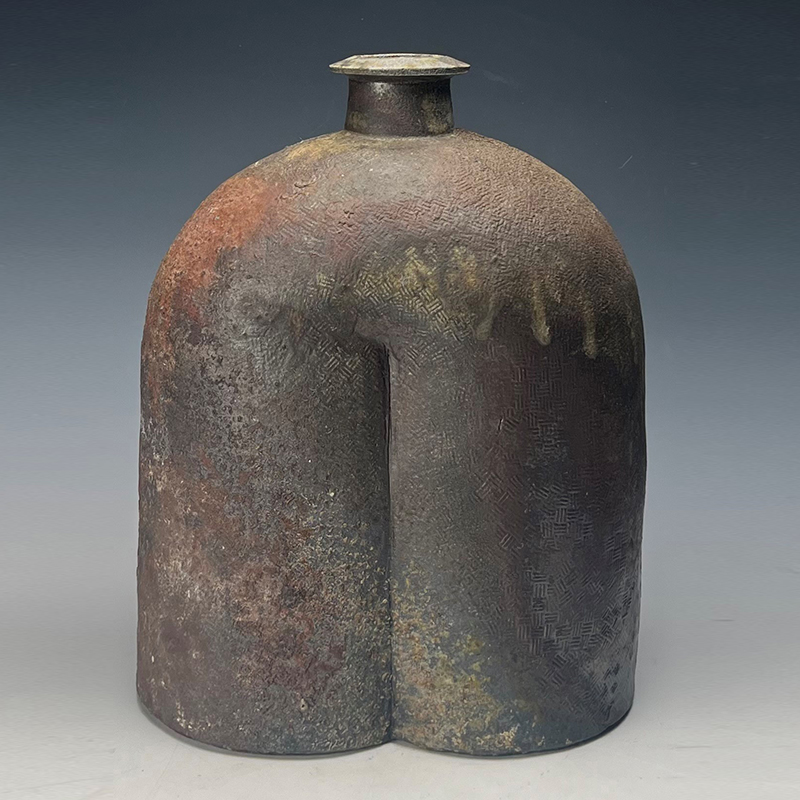
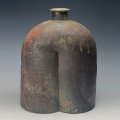
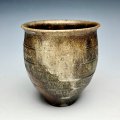
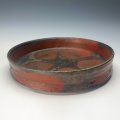
Johnson’s work often explores human themes through the physical characteristics of his pottery, and his process emphasizes the unpredictable, organic changes introduced by the intense heat of the wood kiln. His pieces often appear both symmetrical and slightly distressed, representing a blend of control and natural variation that he sees as a metaphor for human life.
I wasn’t initially drawn toward making unglazed utilitarian pottery, but over time, I began to see this as a way to evoke a sense of stillness and mystery in my work. My aim is to make useful pots that offer little in the way of ornamentation. Rather, I want them to be cultural touchstones; objects of contemplation as well as tools for domestic life. Within a culture which celebrates quick and insignificant revelations, these pots act as counterpoint; disruptors which are both recognizable (e.g. a bowl, a cup, a vase) yet somehow favor the flawed, scared, and vulnerable over the ornate and pure. This disruption is meant to make way for an alternative narrative; a way of sensing oneself and world with greater empathy and awareness.
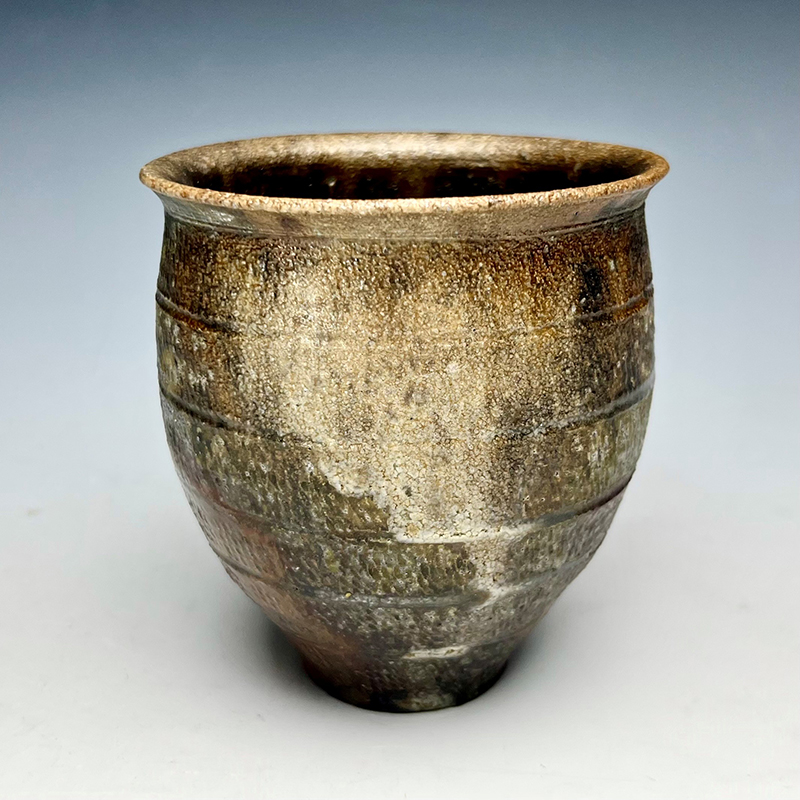
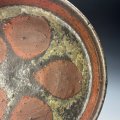
When shaping a vessel, I often use a tool to scrape or beat a form that may otherwise seem rigidly structured and symmetrically balanced. This heightens tension between conventional expectations and those presented. I use natural materials to further evoke a sense of the unexpected; such as collecting and using a local plant, such as Scouring Rush, to make fire drawings on the work or by embedding small stones in the clay which later erupt through the stone-like surface of the pottery.
It is significant that clay and fire are both irregular and natural forces. So are we. We have a capacity for reason and mathematical precision and yet are half-wild, full of biological and spiritual mysteries which drive our impulses despite existing, often, beneath consciousness. Poets refer to it as the shadow – aspects of our personality, our humanity, which are hidden from us, yet bare a significant psychological or spiritual influence all the same. The central theme of my work is related to the discovery, and eventual acceptance, of this transcendent mystery.
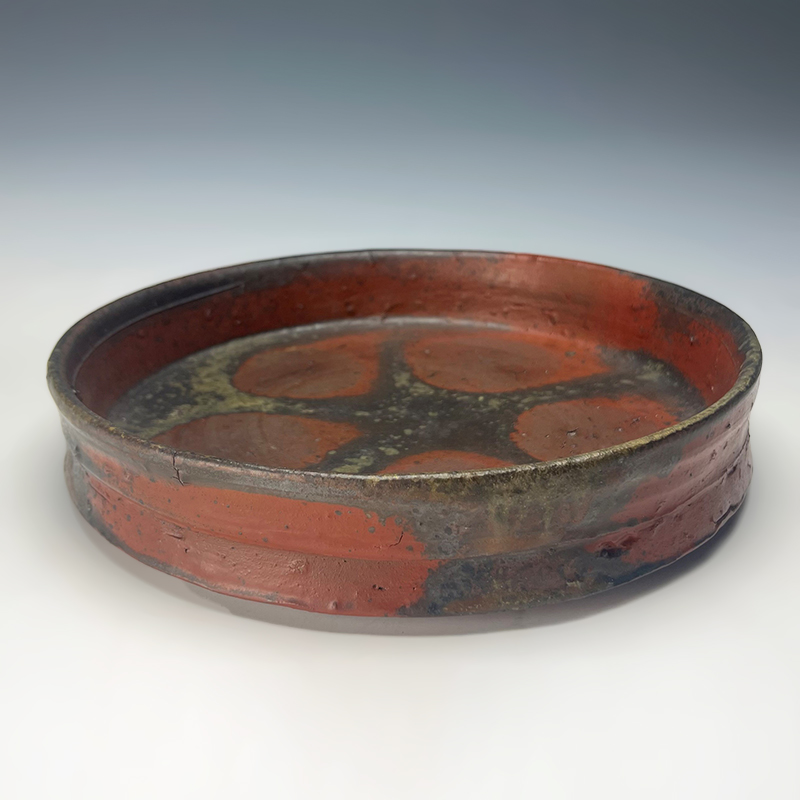
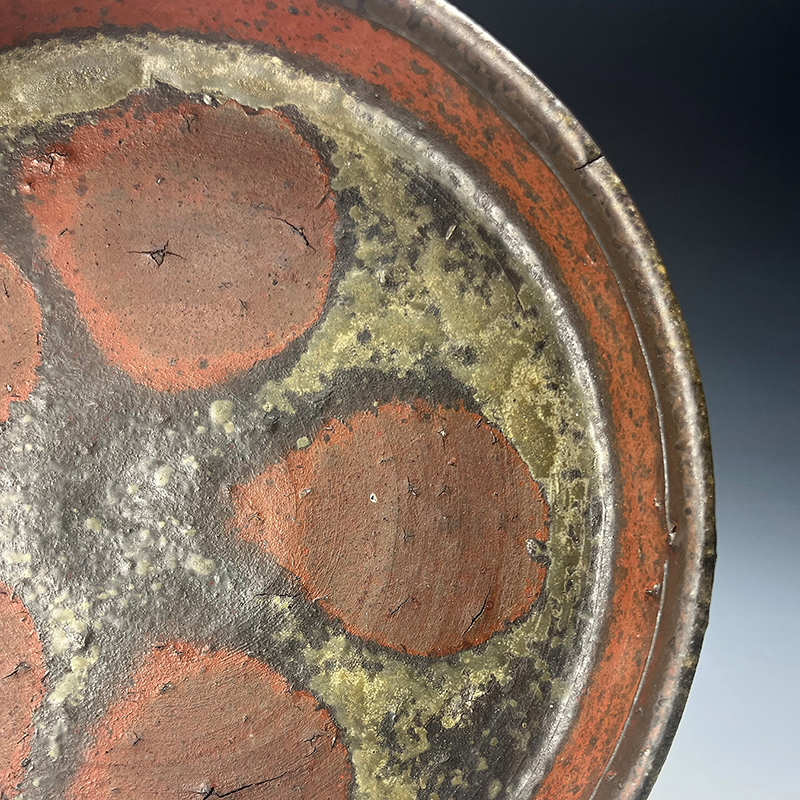
My work looks dark and rustic. There is evidence of both the process of shaping wet clay and its transformation through fire. I achieve this by placing pots within a wood burning kiln, and over the course of a firing, they are marked by wood and heat, melting ash and burning embers. The resulting patina of natural hues and irregular textures creates quiet surfaces that seem more like shadow than scorched earth and aim to strike a balance between the wild and mysterious parts of ourselves and that part of our psyche that sets us apart from them.
-Samuel Johnson